©2026 Fresh Air Heating, Cooling & Indoor Air Quality. All rights reserved. A Trades Mosaic Company, designed by RMH Websites.

.svg)

.svg)
Scott Dickens owns a Federal-style home in Richmond's Museum District. The house was built in the 1870s, sits on a narrow city lot, and has been continuously occupied since it was constructed. Scott uses a wheelchair, which meant the project needed to be planned around accessibility from day one: no temporary obstacles in hallways, no electrical or HVAC components mounted out of reach, and no extended periods where parts of the house were unavailable to him. The HVAC system was a patchwork of upgrades from previous owners going back at least four decades, including ductwork in the attic that ran to nowhere in particular.
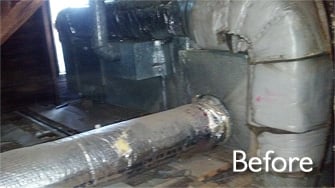
The attic had three separate trunk lines that had been installed by previous owners and then partially abandoned over the years. Two of them led to registers that had been drywalled over decades ago and were no longer connected to any living space. The third was actively serving the upstairs rooms but was massively oversized for the load and was leaking enough conditioned air into the attic to drop the system's actual delivered capacity by a noticeable margin. Downstairs, the cooling was on a single zone with the only thermostat in the main hallway, which meant Scott was reading a temperature in a part of the house where he rarely spent time.
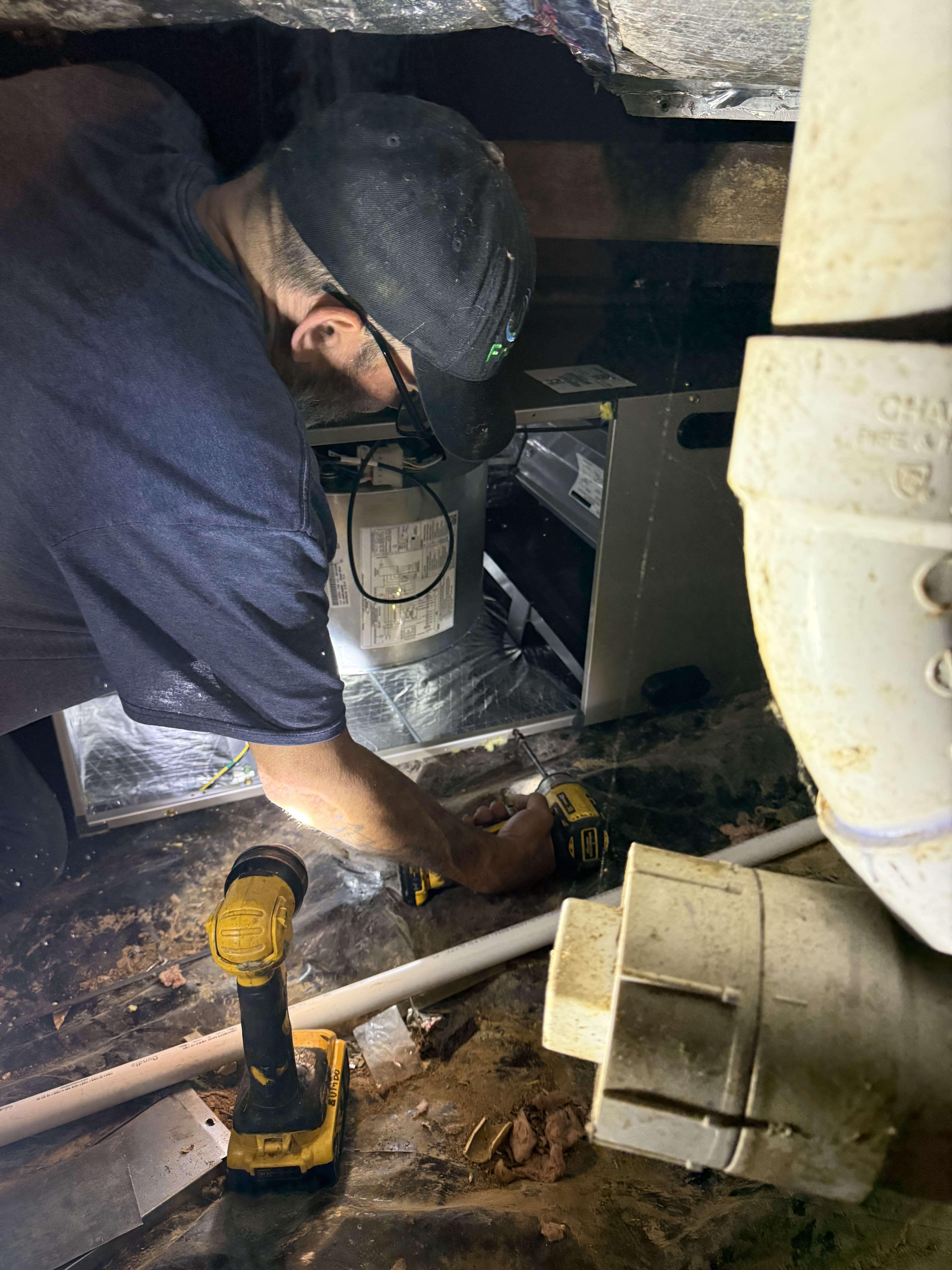
We removed the abandoned attic ductwork piece by piece, sized and installed new properly insulated trunks where the upstairs rooms actually needed them, and converted the air conditioning from one zone to two so the upstairs and downstairs could run independently. We mounted the new thermostats at heights Scott could reach from a wheelchair (one for each zone) and chose programmable but non-touchscreen units so he did not have to learn a smartphone app to run his house. The downstairs thermostat went in a part of the house Scott actually uses, which made the system's behavior match his lived experience. We staged the work over five days so that one floor of the house was always conditioned and accessible while the other floor was being worked on.
Carrier two-stage gas furnace and a matching 16 SEER air conditioner sized to the new load. Zone dampers from Honeywell with their TrueZone controller, and Honeywell T6 Pro programmable thermostats (the dial-and-button kind, not touchscreens). New supply ducts in the attic were R-8 insulated, sealed at every joint with mastic, and pressure-tested before being closed up.
Every part of the project was planned around access. Tools and parts were staged in one room at a time and removed at the end of each day so hallways stayed clear. The crew put down floor protection on every walking path and used a single entry point for the duration of the project. When we needed to shut off power, we coordinated with Scott in advance so he could plan around it. The project manager handled the daily check-ins so he had a single person to call.
The whole job generated less than one leaf-and-grass bag of waste from the homeowner side. The removed ductwork went to a metal recycler, the old equipment was reclaimed by the manufacturer's takeback program, and the cardboard and packaging from the new equipment were broken down and recycled. For an old-house HVAC renovation, that is about as clean as it gets. The two-zone setup typically drops energy use noticeably in a multi-story historic home because upstairs and downstairs no longer fight each other through a single thermostat.
Fresh Air is licensed in Virginia under 2710051155 (HVAC) and 2705143403 (electrical, gas, and plumbing), and our technicians are NATE-certified. We have done historic home HVAC work from Church Hill to the Fan to Ginter Park, and we understand that the work is as much about respecting the house and the homeowner as it is about the equipment.


.svg)


.svg)